Why Does Gimbap Taste Better in Korea?
One Roll in America Taught Me the Difference
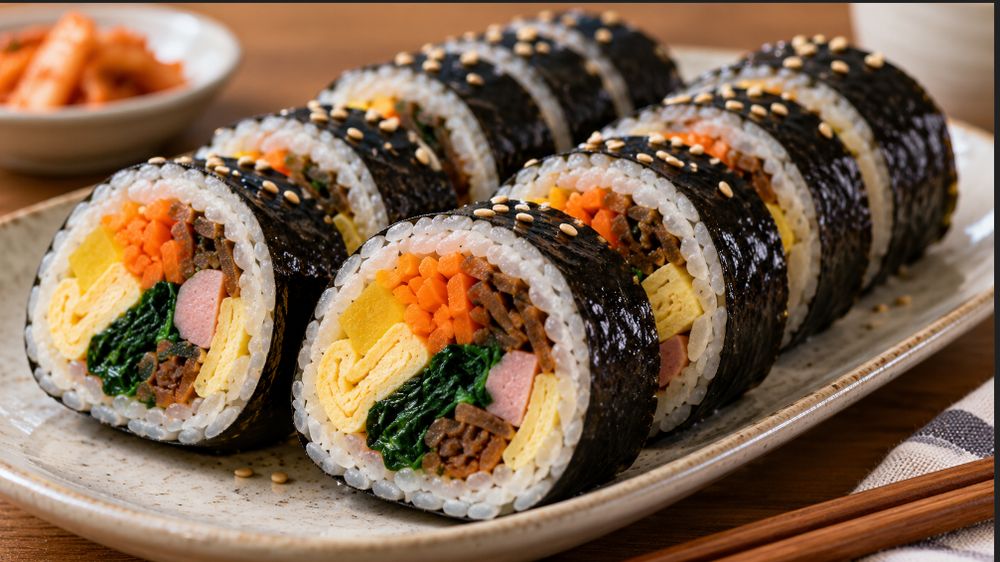
A while back, I got gimbap — sometimes spelled kimbap — with some friends at a Korean restaurant in the US.
I took one bite and something felt off. It was definitely gimbap. But it wasn't the gimbap I knew.
At first I thought it was just different ingredients. But looking closer, the reason was actually pretty simple: the vegetables were raw, not cooked.
In Korea, gimbap usually isn't made by just tossing raw vegetables in. Most fillings get prepared separately first — carrots sautéed, ham pan-fried, burdock root simmered in seasoning, spinach blanched and seasoned. The egg gets cooked separately too. Every ingredient gets its own bit of work before it goes anywhere near the rice.
That said, raw vegetables have their own appeal — that crisp, fresh bite is a different kind of good. But Korean-style gimbap has a quieter thing going on underneath that.
Every ingredient carries its own flavor
This is why each ingredient gets its own treatment. The carrots aren't just sautéed — they're seasoned. The spinach isn't just blanched — it's seasoned too, after. Each ingredient is basically finished into its own small dish before everything comes together.
So when you actually bite into it, it doesn't taste like rice and vegetables mixed together. Each ingredient still tastes like itself, distinct from the others.
There's also something easy to overlook: the rice. It's tempting to assume gimbap rice is just plain white rice. But in Korea, the rice itself is usually seasoned too — a bit of salt, a bit of sesame oil. The rice already has flavor of its own before anything else touches it, which is part of why everything comes together so well.
And then there's the thing I think matters most: sesame oil.
That nutty smell in gimbap? That's the sesame oil.
If sesame oil isn't something you use often, one whiff from the bottle will tell you everything. It's rich, nutty, unmistakable.
In Korean gimbap, sesame oil goes into the rice, and it's often used when sautéing the fillings too. That particular smell — the one people associate with gimbap — mostly comes from the sesame oil used while cooking the ingredients.
Seasoned rice, individually prepared fillings, sesame oil worked in at a few different points — none of these steps look like much on their own. But they stack up. And at the end, it all gets rolled up in seaweed and eaten in one bite.
That's probably why the gimbap I had in the US tasted unfamiliar. It wasn't that the ingredients were completely different — it was how they'd been prepared. Raw carrot and sautéed carrot are still both carrot, but the taste, the smell, the texture — all of it changes.
That doesn't make gimbap abroad "wrong"
To be clear, I'm not saying the gimbap I had in the US was bad or incorrect. Like a lot of Korean food that's traveled abroad, gimbap adapts to local ingredients and tastes as it spreads. Raw vegetables can make it feel fresher, lighter — and plenty of people probably prefer it that way.
But for someone who grew up eating gimbap in Korea, it read differently to me. The flavor I was used to came from all those small steps of preparing each ingredient on its own.
It's the kind of difference you don't really notice day to day. In Korea, gimbap isn't a special dish — it's just something ordinary. You grab a roll for a quick breakfast, pack it for lunch, bring it on a picnic. Nobody explains gimbap to anyone in Korea. It's just gimbap.
But after trying a version made a different way, I think I finally understood why the gimbap I'd been eating without thinking about it actually tasted the way it did.
Sautéing the carrots. Seasoning the spinach. Seasoning the rice. And finishing it off with that nutty hit of sesame oil.
So for me, gimbap just tastes better in Korea. Maybe not because of some secret technique — but because of all those small, ordinary steps nobody thinks twice about.